Explain the runtime architecture of Google ADK (Runner, Session, Events, InvocationContext) with flow diagrams.
#google-adk#runtime#runner#session#events#architecture
Answer
Google ADK Runtime Architecture
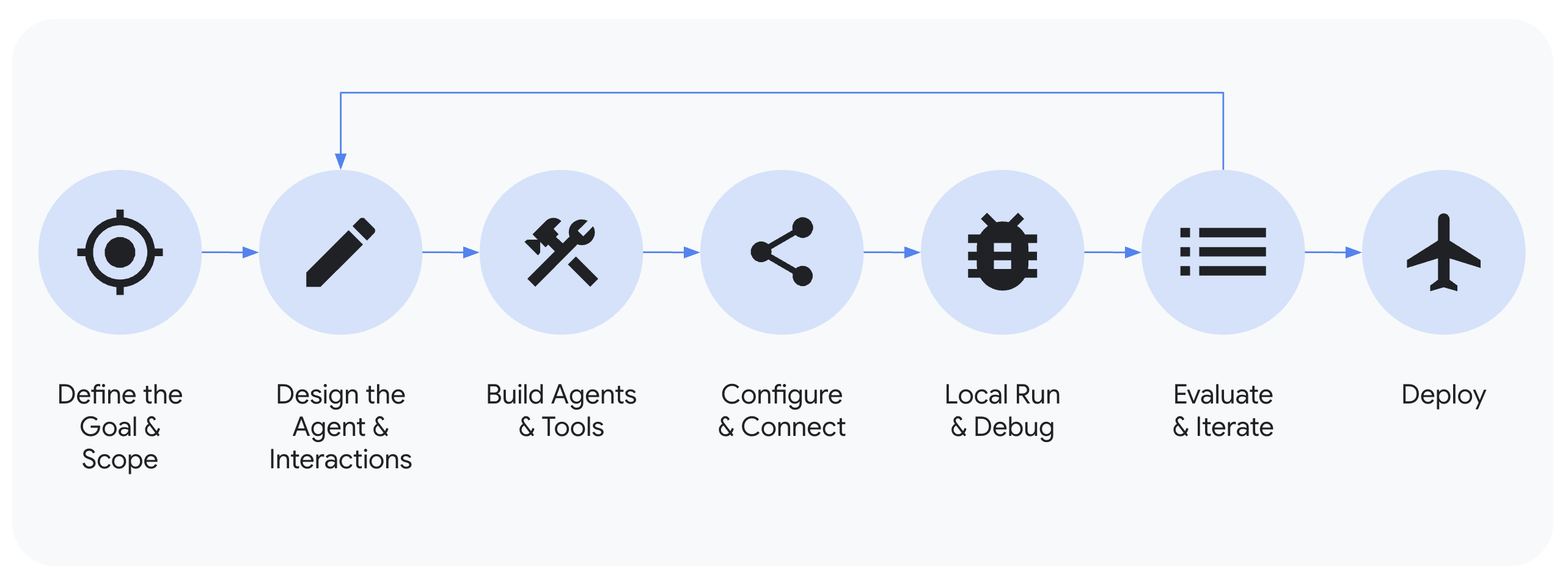
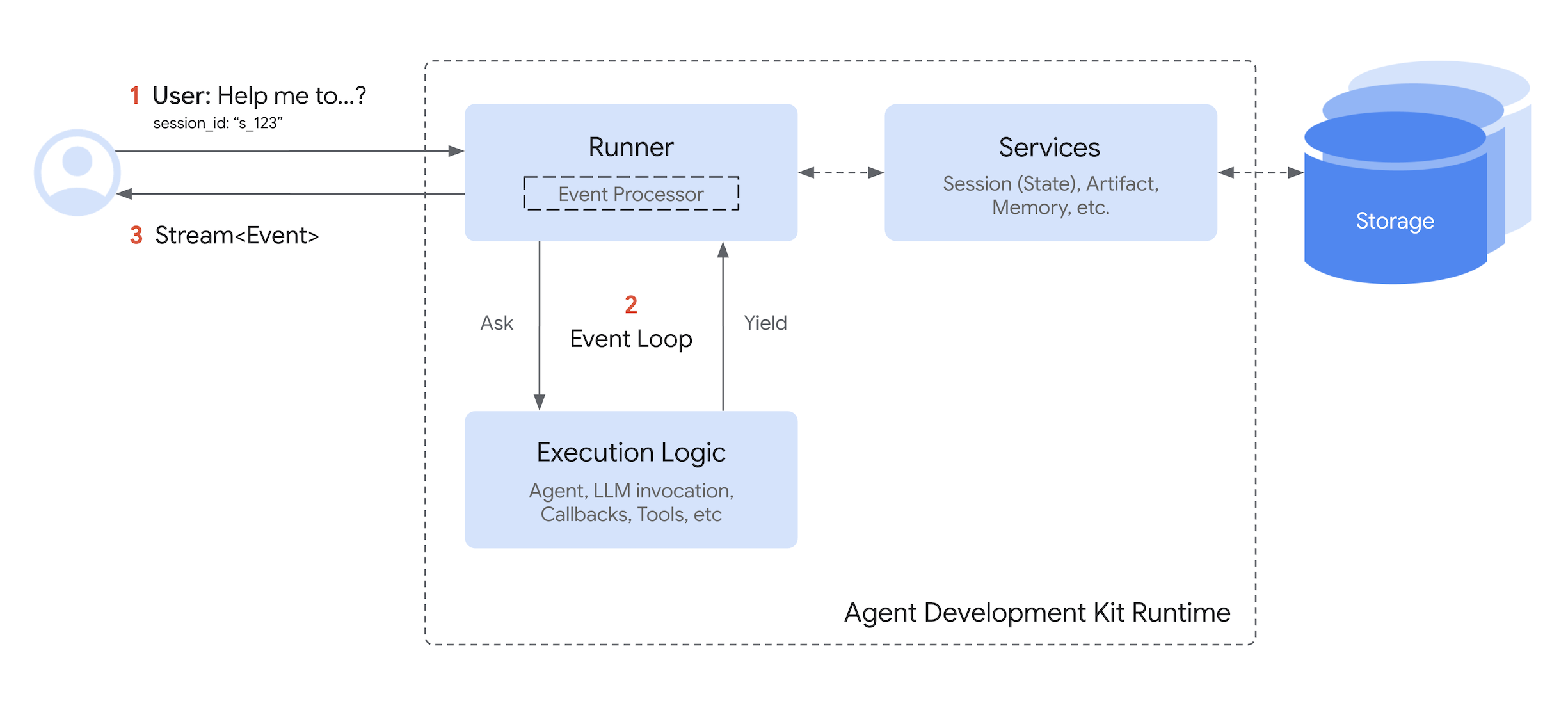
The ADK runtime is the execution engine that manages the event loop, sessions, and agent invocations.
Core Runtime Components
Component Details
| Component | Role |
|---|---|
| Runner | Core execution engine - manages the event loop |
| RunConfig | Configuration for runtime behavior |
| InvocationContext | Shared context passed to agents during execution |
| Session | Container for events, state, and artifacts |
| Events | Chronological sequence of messages and actions |
| EventActions | Control flow (escalate, transfer, skip) |
| SessionService | Manages session lifecycle (CRUD) |
| MemoryService | Cross-session long-term knowledge |
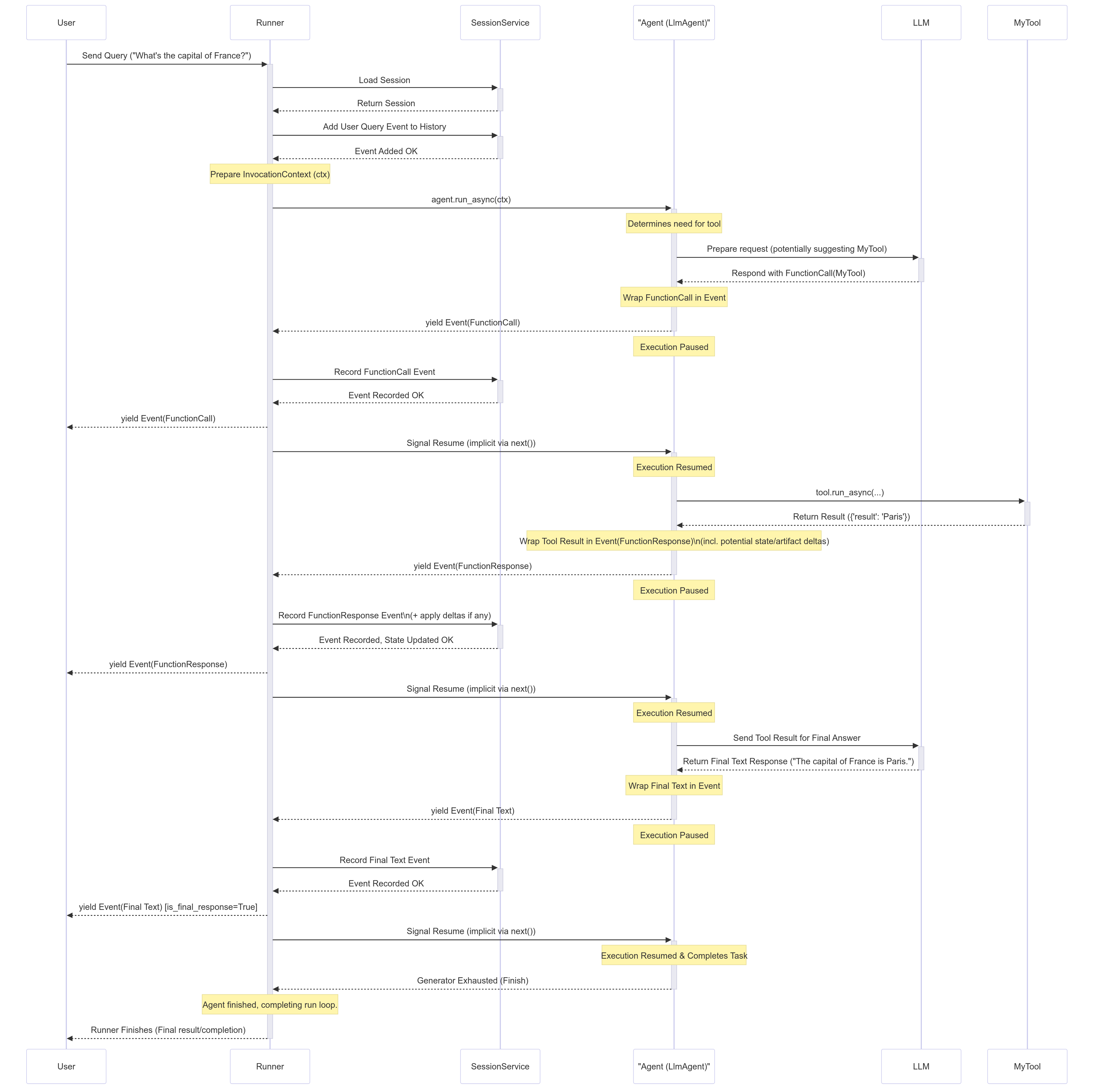
Event Loop Flow
Invocation Context
The
text
InvocationContextpython# InvocationContext provides: # - session: current Session object # - agent: the executing agent # - run_config: runtime configuration # - invocation_id: unique ID for this invocation class InvocationContext: session: Session # current session agent: BaseAgent # executing agent run_config: RunConfig # runtime config invocation_id: str # unique invocation ID branch: str # branch identifier (for parallel)
Creating a Runner
pythonfrom google.adk.runners import Runner from google.adk.sessions import InMemorySessionService runner = Runner( agent=root_agent, app_name="my_app", session_service=InMemorySessionService(), ) # Run the agent async def main(): session = await runner.session_service.create_session( app_name="my_app", user_id="user-123", ) async for event in runner.run_async( user_id="user-123", session_id=session.id, new_message="What is RAG?", ): if event.content and event.content.parts: print(event.content.parts[0].text)
Events
Events are the chronological record of everything that happens:
python# Event types # - Content: user/agent messages # - FunctionCall: tool invocations # - FunctionResponse: tool results # - EventActions: control flow signals # Each event contains: event.author # "user" or agent name event.content # message content (Parts) event.actions # EventActions (escalate, transfer, etc.) event.invocation_id # which invocation produced this
RunConfig
pythonfrom google.adk.runners import RunConfig config = RunConfig( max_llm_calls=20, # prevent infinite loops speech_config=None, # audio config response_modalities=None, # text, audio, video save_input_blobs_as_artifacts=False, support_cfc=False, # client-side function calling streaming_mode="SSE", # or "NONE" output_audio_transcription=False, ) async for event in runner.run_async( user_id="user-1", session_id=session.id, new_message="Hello", run_config=config, ): print(event)